


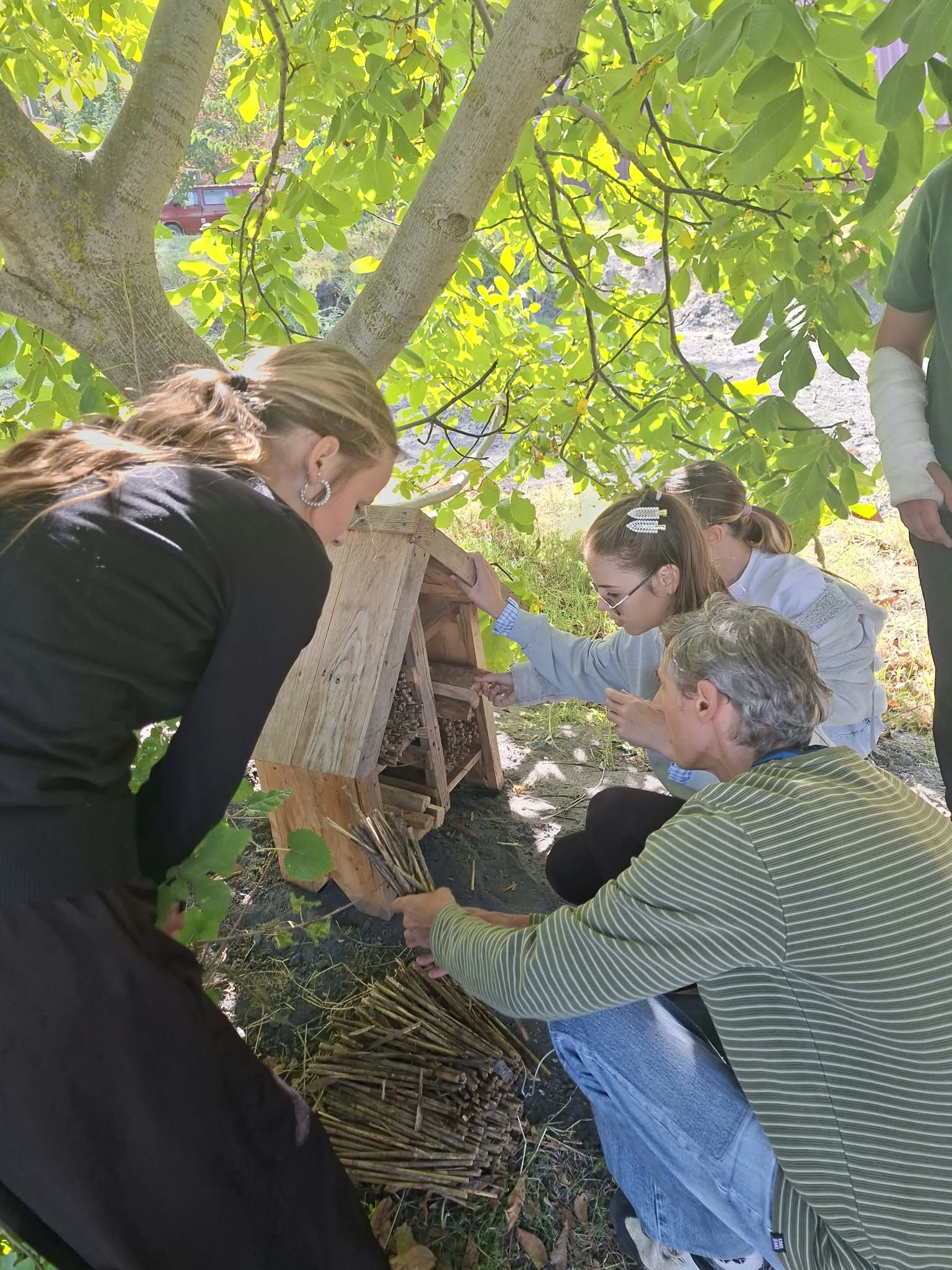
Here is the first reaction full of curiosity from students in the villages of Purcari, Olănești, Antonești, and Răscăieți! At first, the children giggled and jokingly asked how much bugs should pay for a night's stay. But the adventure was just beginning!
Recently, the National Environmental Center together with the Biotica Ecological Society embarked on a wonderful ecological mission through the localities of the Lower Dniester National Park. The route started from the viewpoints in the village of Purcari and the local gymnasium, then continued with interactive and unusual geography and biology lessons at the Bogdan Petriceicu Hașdeu High School in Olănești and the gymnasiums in the villages of Antonești and Răscăieți. In total, 8 bird nests and 3 insect hotels were installed!
Why do insects need a hotel?
Our colleagues explained to the children the purpose of these ingenious installations. Insect hotels are the perfect refuge in the cold season for hibernation and a safe place where beneficial insects, such as solitary bees, ladybugs, or bumblebees, can lay their eggs.
Where does the idea come from and where is it practiced?
The concept originated in Western European countries to support nature in areas where human intervention has reduced natural habitats. Today, such bug houses are extremely popular in parks, schools, and botanical gardens in neighboring countries, such as Romania or Ukraine, becoming a true green trend!
From 3 stars... to 5 stars!
After the explanations, the children got down to business! With great enthusiasm, they upgraded the hotels to 5-star status. The little environmentalists filled the rooms with natural materials gathered by themselves – sawdust, twigs, dry leaves, pinecones, and straw – creating an ultra-comfortable environment for future guests.
The installation locations were chosen with great care: quiet areas, sheltered from noise and hustle.
From now on, students will be able to have biology lessons right in the open air, observing up close the life and evolution of the tiny creatures, with all these actions dedicated to protecting the unique biodiversity of the Lower Dniester National Park.
This activity is part of the project „Supporting the authorities of the Republic of Moldova in the sustainable management of the Dniester River”, implemented by UNDP Moldova with the generous financial support of Sweden.
More photos from these activities can be viewed here.